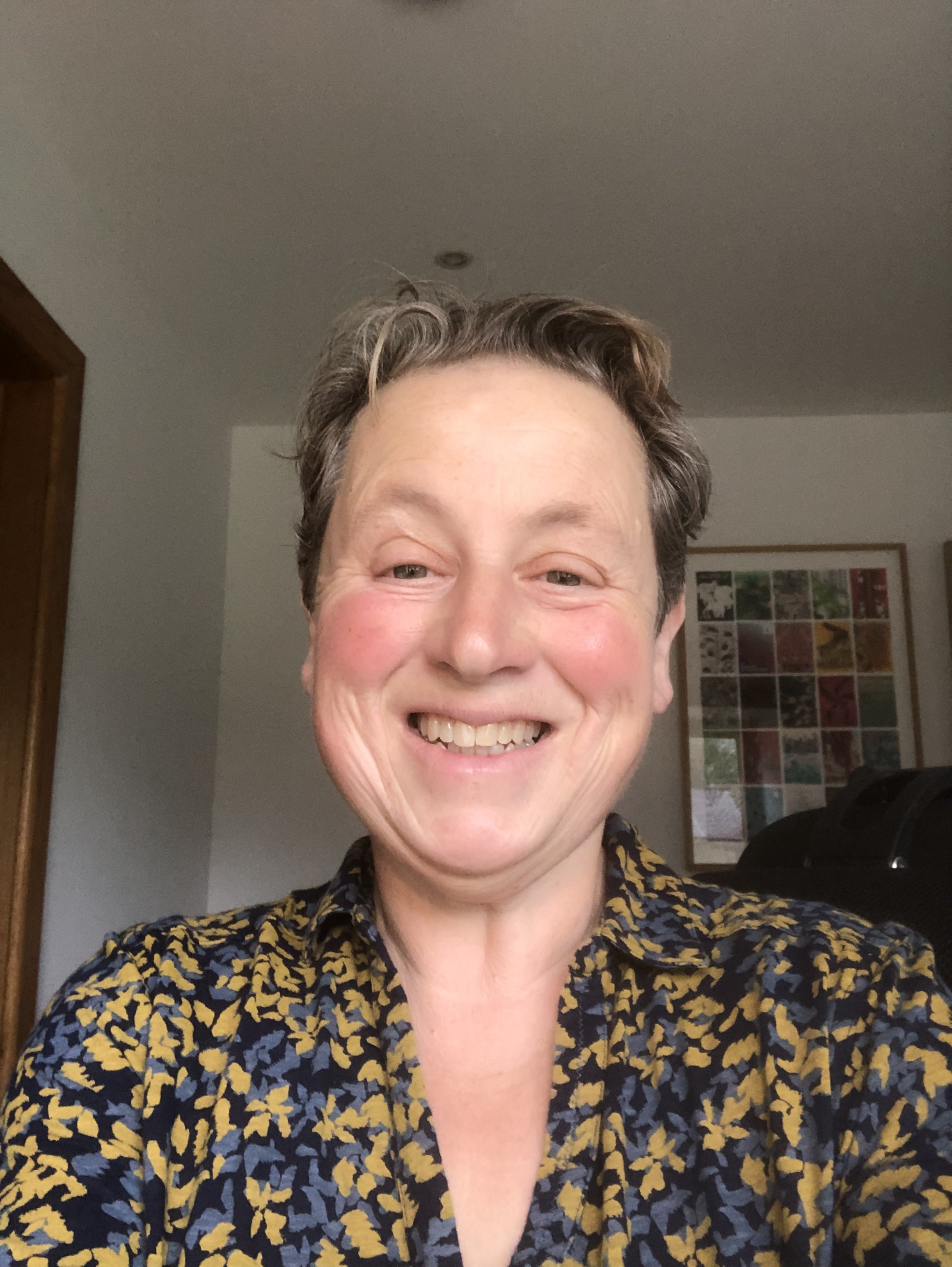
Hello! I’m Emma Thomas, the founder of Children of Transitioners, an organisation which advocates for the safety, privacy and dignity of children of transgender people. When I was 11, my father told me that he was a transsexual and ‘came out’ to me, dressed in women’s clothes. For complicated reasons (mostly because my mother was very ill), I lived alone with him while he transitioned, until I left home at 18. He took hormones, had extensive electrolysis and an operation which had some complications. He had a lot of trans friends over to stay, including a sex worker he had an intense relationship with and some who used me as ‘cover’ to help them pass. I think the idea was that if they were seen on the street with a kid then people wouldn’t look too closely at the hair and make up. It’s difficult to recall how well this worked, but we weren’t confronted at all. The British can be very polite. This was over 40 years ago, and I have had a number of encounters with transsexuality and transgenderism since then.
I set up this site to explore the experience of being a child of a transitioner, and I am interested in hearing other people’s experiences of this. What I have found is that there are often recognisable patterns (for example, a lot of our parents are very self-involved, and many of us often feel a sense of grief when we think about our parent’s transition) but also there are lots of different things that happen to us. Some people’s parents undergo a full medical transition, for example, while others just declare that they are ‘trans’ and do very little beyond crossdressing. Some children of trans people are adults when the transition happens, and it affects them in a very different way than when you are a child. Some families break up, some stay together. Some are very abusive and traumatic while others are just more complicated than normal. I loved my Dad with all my heart, and it was devastating to feel that his transition was more important than I was. Now I’m in my fifties, I can look back and see how that experience impacted my life.
As Children of Transitioners, we talk about the emotional impact of what happens to us and the common patterns we experience. We are based in the UK, where we campaign for the welfare of children of trans people. We are concerned about single sex spaces and the prevalence of gender ideology in schools, hospitals and the legal system. We also feel a duty to talk about something that is very uncomfortable to face, which is the sexual nature of adult male transition. Most men who transition as adults, after having children, are autogynephiles. This is a sexual motivation for transition. Sometimes children are kept away from this aspect of their father’s lives, but there are other children who are not as lucky. We feel that it’s essential that at least someone talks about the worst case scenarios – for example, the fathers who ‘feed’ their baby from their chest, or the ones who abuse their children in other ways. Some of the things on this site will be difficult to read, but they are real experiences. I appreciate it’s not all bad. My father gave me his sense of humour and his love of music (which is why, according to Spotify, I’m 78 years old!). But there were some really bad times and I feel we have to be honest about the issues we experience.
We’re unfunded and completely grassroots. However, we have been able to take our concerns to the House of Lords and MPs. I have spoken at Genspect and am a member of the Killarney Group think tank. You’ll find the voices of various different contributors on this site. The reason that you see my face and voice a lot in appearances is because I’m currently the only member of the group who doesn’t need to remain anonymous. Please remember that in your schools and workplaces you may have come across a child of a transitioner who stays silent to protect themselves and their families.
A note on language
When I was younger I was very careful about the language I used in describing my father, but I’ve since had a feminist realisation about the importance of accurate language. I rarely speak to my father these days, so how I address him doesn’t really come up. It’s not that we hate each other; he’s a pretty self-involved character and isn’t interested in having a relationship with me. I’ve come to terms with that (some Buddhist courses and reading about narcissism helped!). So I use ‘he/him’ and call him my father. Your language may be different. My intention isn’t to be mean or disrespectful to my father; it’s more that I want to be as truthful as possible. I don’t believe that my father actually became a woman through hormones and surgery, although I tried very hard to be accepting of his condition.